Traffic Untangle: Puzzle Roads
- 4.9
- Rating
- 500.00K
- Installs
- Free
- Price
 Analysis by App-foxy
I spent time with Traffic Untangle: Puzzle Roads as a compact 3D puzzle game, and its appeal became clear very quickly: it turns a crowded road scene into a planning problem that is easy to understand but not always easy to solve. Cars are arranged in awkward traffic situations, and the goal is to work out the order and direction that lets everything move without creating another blockage. It is the kind of game I can pick up for a short break, yet it still gives me enough to think about that I do not feel I am simply tapping through empty time.
That makes it particularly interesting on a shared phone or tablet. One person can play a level, hand the device to someone else, and ask, “What would you move first?” The game naturally creates small moments of coordination without needing a complicated multiplayer system. I found that useful in a household where different people want different kinds of games: one player can enjoy the visual puzzle, while another can contribute by spotting a route or warning about a move that will trap the remaining cars.
How the 3D traffic puzzles work in everyday play
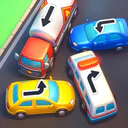
The central idea is straightforward, but the three-dimensional presentation gives the puzzles more personality than a flat grid. Cars, roads, and obstacles form a visual arrangement that I have to read before making a move. Instead of relying only on written instructions, I look at the scene, identify which vehicles have room to leave, and then decide whether clearing one route will open another.
You May Also Like

 Blood Strike: 2.5 Anniversary
Blood Strike’s Loadouts Turn Every Drop Into a Tactical Gamble
A close look at Blood Strike’s custom loadouts: how fast access to signature weapons reshapes its battle royale rhythm, rewards preparation, and narrows the gap between fights.

 Pandora - Music & Podcasts
Pandora’s Music Is Easy to Start, but Harder to Recover
Pandora’s strength is its low-effort path from a seed to a station. Its weak spot is how much confidence it asks you to place in connection, setup, and quiet recovery.

 8 Ball Pool
 Is Built on Rivalries, Rematches, and Routine
A close look at the rivalries, rematches, shared routines, and unanswered safety questions that turn a quick pool match into a persistent mobile community.

 Samsung Music
’s Quiet Strength Is Playing What You Already Own
Its reach comes less from spectacle than from dependable access to a personal library. That simplicity is both the app’s strongest retention engine and its ceiling.

 AccuWeather: Weather Radar
AccuWeather Review: A Quick, Clear Forecast for Everyday Decisions
For everyday plans, the best forecast is the one you can understand quickly. AccuWeather makes rain timing, radar, and local conditions easy to act on, with a few trade-offs.

 Hill Climb Racing
Why Hill Climb Racing Still Turns Crashes Into One More Run
A tiny car, a bumpy hill and one more upgrade: Hill Climb Racing keeps resurfacing because its simple chaos makes every near-miss feel personal.
More From Our News Desk
View All News


My first instinct in this type of game is usually to move the most obvious car immediately. Traffic Untangle: Puzzle Roads often rewards a slower approach. The vehicle that appears ready to go may be blocking the only useful angle for another car, or moving it may leave the board in a less convenient shape. The better habit is to scan the whole scene first and separate harmless moves from moves that change the puzzle’s structure.
That is one of the game’s strongest qualities. It does not need a long tutorial to explain the basic objective, but the visual layout gradually encourages more careful thinking. I began checking exits, identifying bottlenecks, and considering the order of several cars rather than treating each vehicle as an isolated tap. For a puzzle game aimed at Everyone, that balance works well: the premise is approachable, while the later decision-making can still demand patience.
The 3D view also introduces a small trade-off. A scene can look lively and clear at a glance, but visual depth sometimes makes it harder to judge exactly how pieces relate to one another. When I was unsure, I stopped trying to solve the puzzle from a quick impression and inspected the full arrangement instead. That extra pause is not a flaw in itself, but players who prefer perfectly flat, grid-based logic may find a traditional tile puzzle easier to read.
A practical routine for solving difficult boards
My most useful routine was to begin with the edges. I checked which cars had an unobstructed path, then looked for vehicles that were acting as gates between the center and the outside. This prevented me from wasting early moves on cars that looked mobile but were not actually important to the solution.
A second helpful habit was to think in short chains rather than trying to predict every move. I would ask which car needs to move first, what space that creates, and which vehicle benefits from that new space. After that, I reassessed the board. This is less mentally tiring than attempting to memorize the entire sequence, especially when the arrangement becomes visually busy.
The third insight is to treat a seemingly bad move as information rather than an immediate failure. If a car blocks two others after moving, I learned that the original position was probably part of the puzzle’s intended order. I could then restart my thinking from the bottleneck instead of randomly tapping different vehicles. That approach makes the game feel more like deduction and less like trial and error.
For a shared-device session, this routine works especially well because it gives two people a simple language for discussing a level. One person can identify the bottleneck, while the other can test the first step. If the move fails, the pair has learned something concrete about the board rather than merely arguing over which car looks easiest to move.
Why it suits short breaks, and where it asks for patience
I would describe the pacing as flexible. A single puzzle can fit into a quick waiting period, but a difficult arrangement can also hold my attention longer because I want to understand the sequence rather than rush through it. That makes the game more useful than a purely reflex-based title when I need a calm distraction.
It is not the best choice for someone looking for fast action, competitive matches, or a story-driven adventure. The pleasure comes from arranging movement and resolving congestion. Players who dislike restarting a puzzle after an incorrect decision may also find the experience frustrating, particularly when the solution depends on recognizing an order that is not immediately obvious.
Compared with ordinary matching games, this has more spatial reasoning and less dependence on creating chains or collecting identical pieces. Compared with classic sliding-block puzzles, it feels more accessible because the traffic theme makes the objective instantly recognizable. A dedicated logic game may offer more abstract depth, while this one is easier to share with a casual player who does not usually choose puzzle apps.
Using it on a shared household device
On a family tablet or a phone passed between people, I would establish a simple turn-taking rule before starting. The game is easy to hand over, but the person holding the device may become attached to a particular solution attempt. Agreeing that each player gets one try, or that anyone may suggest a move but only the current player taps, keeps the session friendly.
I also found it better to use a separate moment for discussion rather than crowding around the screen while someone is making a delicate move. One person can describe the suspected route, and the player can decide whether to follow it. This preserves the satisfying feeling of solving the puzzle instead of turning the game into a group of people giving constant instructions.
There is an important account boundary here: a shared device is not the same as a shared game profile. I would not assume that different household members have separate progress or personalized spaces simply because they take turns. If several people care about their own records or completion history, they should agree in advance on how they will share the device and recognize that their progress may be mixed together.
That matters most when a child and an adult use the same installation. An adult may want to experiment, restart, or move quickly, while a younger player may want to preserve a level and solve it independently. The practical solution is coordination, not pretending the app provides a family account structure. I would let the younger player finish a puzzle before another person starts testing alternative moves.
Age context, trust, and in-app spending
The game carries an Everyone content rating, which fits my experience of its basic presentation. The subject is traffic organization rather than combat or mature storytelling, so it is easy to imagine it being used as a light puzzle activity by a broad household audience. That rating does not replace a parent’s judgment about screen time or spending, but it does make the game simpler to introduce than many action-focused alternatives.
It is free to install, which lowers the barrier for trying it on a shared device. At the same time, in-app purchases range from $0.99 to $99.99 per item. That is the detail I would discuss before letting a child play without supervision. A free download can still lead to spending decisions, so the person responsible for the device should review the platform’s purchase protections and make the household rule clear.
I would also explain that “free” describes access to the game, not an agreement that every optional transaction is irrelevant. A child may understand the puzzle perfectly and still not understand the real-world consequence of tapping a purchase prompt. In a family setting, trust works better when everyone knows who is allowed to approve spending and when the adult checks the device’s account settings rather than relying on verbal promises.
The age context is also useful for choosing the right way to play together. With a younger child, I would focus on observing the board and explaining why a move opens or closes a route. With an older child or adult, I would step back and let them develop their own solving method. The same game can therefore serve as a cooperative conversation or a quiet solo challenge, depending on how much help the player wants.
Device expectations and version details
Traffic Untangle: Puzzle Roads is available for Android, and the listed minimum operating-system requirement is Android 7.0. That makes it potentially suitable for older compatible devices, although the actual comfort of play will still depend on the screen size, touch response, and general condition of the phone or tablet. I would prefer a larger screen for shared sessions because several people can see the road layout more easily.
The current version is 1.0.22. I would keep the installation updated through the normal app store process, especially when several people use the same device and expect the game to behave consistently. Updates can also matter when a puzzle game relies on touch input and visual presentation, since small changes to responsiveness or layout can affect how comfortable it feels.
The developer is Little Whale Game Limited, and the game has built a strong store presence, with an average rating of 4.9 from around 5.8 thousand ratings and more than 500 thousand installs. Those figures suggest that the basic concept has connected with many players, but I would still treat them as a starting point rather than a guarantee that every household will enjoy the same pacing. A high rating cannot turn a deliberate logic game into an action title for someone who wants constant speed.
The release date is January 14, 2026, so I would judge the game mainly by how its current version feels in use rather than by assumptions about a long history of content. For a new player, the important questions are practical: Is the visual puzzle readable on the available screen? Does the household enjoy taking turns? Is the player comfortable with restarting and thinking through order? Those answers are more useful than popularity alone.
Who should choose it, and who should skip it
I would recommend it to someone who likes visual puzzles, short sessions, and the satisfaction of finding the correct sequence without needing complicated rules. It is especially suitable for a household that wants a game people can discuss while sharing one screen. A parent, sibling, or partner can offer suggestions without needing to learn a large control scheme first.
It is also a reasonable choice for players who are moving from casual matching games toward more deliberate logic. The traffic theme gives newcomers an immediate goal, while the crowded layouts encourage them to plan. The best results come from players willing to pause, inspect, and revise their approach.
I would skip it if my priority were online competition, deep character progression, a narrative campaign, or rapid reflex challenges. I would also choose a flatter puzzle format if visual depth made it difficult for me to track positions. Someone who wants complete separation between family members’ progress should think carefully before using one shared installation, because taking turns on a device does not automatically create separate account boundaries.
For a typical evening, I can imagine one person solving while another prepares dinner, then swapping roles after a level. For a waiting room, I would play alone with the sound and interruptions handled in whatever way suits the device. For a child’s independent session, I would first settle the purchase rule and decide whether the child should use the device alone or with an adult nearby. These small decisions make the experience smoother than simply installing the game and hoping everyone uses it the same way.
My household verdict
After using it as both a solo puzzle and a shared-device activity, I see Traffic Untangle: Puzzle Roads as a focused, approachable game with more thought behind each move than its simple premise suggests. Its best feature is the way a familiar traffic scene becomes a lesson in order, space, and consequences. I enjoyed the moments when a board that looked completely blocked became manageable after I identified the one vehicle controlling the rest.
The limitations are equally clear. The 3D presentation may require closer inspection than a flat logic board, and the deliberate pace will not satisfy people who want constant action. Shared use also needs a little household planning around turns, progress, and purchases. None of those issues makes the game a poor choice, but they do affect whether it fits a particular device and family routine.
For me, the strongest recommendation is for a household looking for a free puzzle that can work alone or become a small collaborative activity. I would install it on a compatible Android device, set expectations about in-app spending, and let players solve at their own pace. The key is to treat it as a thinking game first and a quick tap game second. If that sounds appealing, this road puzzle offers a friendly way to spend a few minutes, challenge your planning skills, and give a shared screen a genuinely cooperative purpose.
FAQs for Traffic Untangle: Puzzle Roads
01What is Traffic Untangle: Puzzle Roads?
Traffic Untangle: Puzzle Roads is a casual logic puzzle game focused on organizing tangled traffic routes. You interact with cars, roads, intersections, and obstacles to create a clear path and prevent vehicles from crashing or blocking one another. Its short levels make it suitable for quick sessions, while later stages gradually introduce more complicated layouts that require planning rather than simple trial and error.
02How do you play Traffic Untangle: Puzzle Roads?
The main objective is to untangle the traffic by moving or arranging vehicles and road elements in the correct order. Before making a move, it is useful to observe the entire board and identify which car must leave first. Some puzzles can be solved quickly, but crowded intersections and limited movement options require careful timing, logical thinking, and occasionally restarting a level after an unsuccessful attempt.
03Is Traffic Untangle: Puzzle Roads free to download and play?
Traffic Untangle: Puzzle Roads can generally be downloaded without an upfront purchase, allowing players to try the core puzzle experience for free. However, the game may include advertising, optional purchases, or other monetization features depending on the version and platform. Users should check the Google Play Store or App Store listing for current details about ads, in-app purchases, and supported devices.
04Does Traffic Untangle: Puzzle Roads work offline?
Many of the individual puzzles in Traffic Untangle: Puzzle Roads may be playable without a continuous internet connection, which makes the game convenient for travel or short offline sessions. Nevertheless, an internet connection can still be required for advertisements, cloud-related features, updates, analytics, or restoring purchases. Availability may vary between versions, so testing the game offline after installation is recommended.
05Who will enjoy Traffic Untangle: Puzzle Roads?
Traffic Untangle: Puzzle Roads is a good choice for players who enjoy simple controls, visual logic challenges, and level-based games that can be completed in a few minutes. It is accessible to casual players because the basic concept is easy to understand, but increasingly tangled layouts can still provide a satisfying challenge. It may be less appealing to users looking for racing, realistic driving, or extensive multiplayer features.
Pros
- Simple drag-and-connect controls are easy to learn.
- Short levels make it suitable for quick gaming sessions.
- Road layouts gradually introduce more complex challenges.
- Works well for players who enjoy calm
- logic-based gameplay.
- Minimal controls make it comfortable on smaller phone screens.
Cons
- Later puzzles can feel repetitive once the core mechanic is familiar.
- Some levels may be solved quickly without much experimentation.
- Limited action may not appeal to players seeking fast-paced gameplay.
- Progress can feel slow for users expecting frequent new mechanics.
- Hints or assistance may reduce the satisfaction of solving puzzles yourself.

Traffic Untangle: Puzzle Roads
Gallery